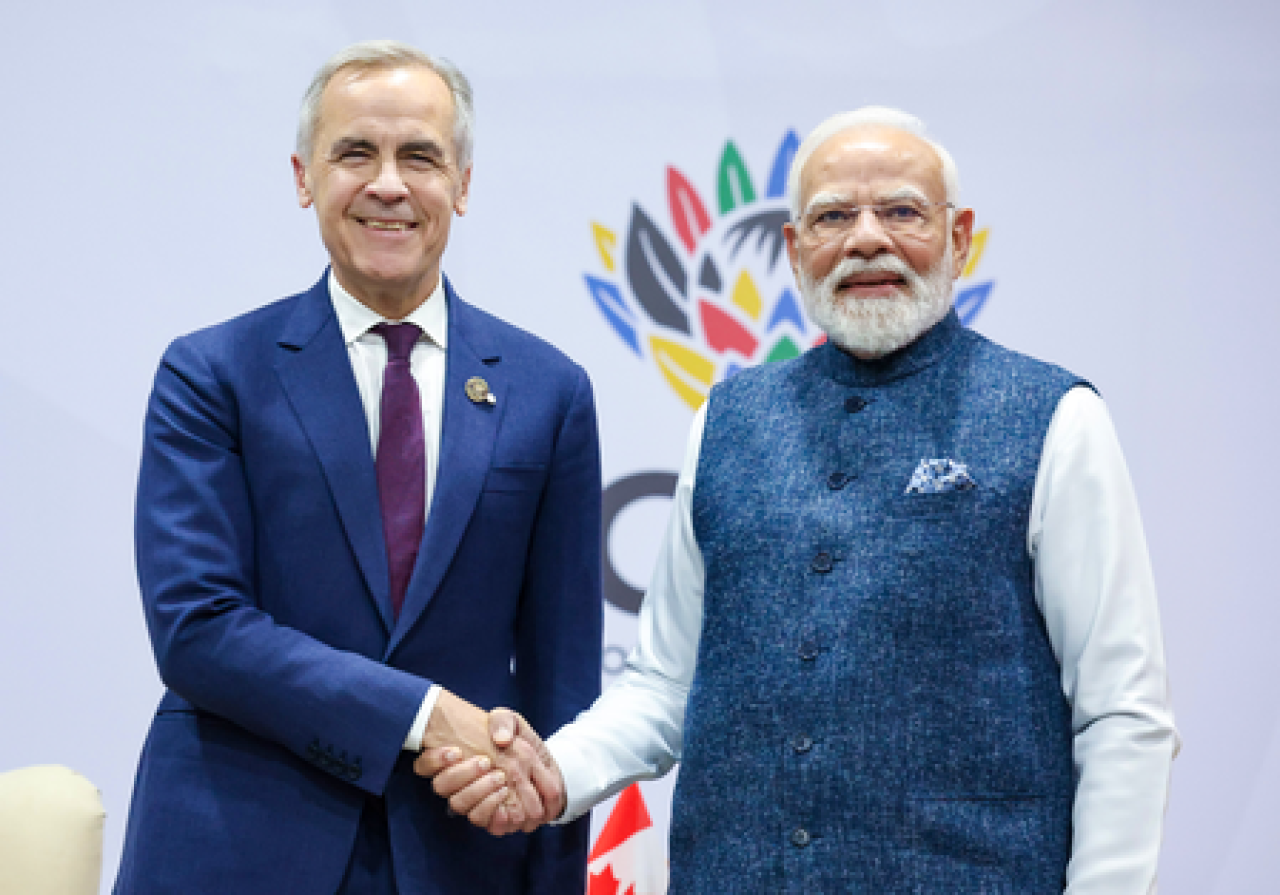
New Delhi, February 13: Despite geographical distance and the absence of a formal military alliance, India and Canada have maintained a strong relationship driven by economic complementarity and shared interests in global governance. A recent report highlights this dynamic.
Former diplomat Sanjay Kumar Verma, in an article published in ‘India Narrative’, suggests that if current trends continue, India-Canada relations will evolve beyond political fluctuations. The focus will shift towards investment flows, energy cooperation, supply chain partnerships, and enhanced people-to-people connections over the next decade.
Verma notes that Prime Minister Mark Carney’s proposed visit to India in the coming weeks could transition bilateral relations from a phase of stability to one of structured expansion. This visit is expected to emphasize trade frameworks, investment flows, and long-term energy integration.
According to Verma, progress in finalizing the ‘Terms of Reference’ for a Comprehensive Economic Partnership Agreement could be a significant step towards institutionalizing economic ties between the two nations. He points out that regulatory facilitation for Indian pharmaceuticals, digital services, engineering products, and refined petroleum in Canada could open up substantial markets for Indian exports.
In return, India could provide markets for Canadian exports in energy resources, potash, pulses, timber, and advanced agricultural technology. Canadian institutional capital is already a major source of foreign investment in Indian infrastructure and renewable energy sectors. A structured trade framework has the potential to double bilateral trade over the next decade, provided there is a gradual reduction in tariffs, regulatory, and mobility barriers.
The report also indicates that beyond trade, this visit could clarify economic, security, and strategic frameworks. Discussions may advance on structured hydrocarbon supply, long-term uranium supply for India’s civilian nuclear expansion, and clean baseload energy requirements.
Additionally, there is potential for expanding industrial and technological cooperation in agriculture, energy, advanced manufacturing, critical mineral processing, aerospace, digital technology, and next-generation manufacturing systems. Areas such as clean and green technology, renewable energy integration, carbon management, and hydrogen value chains could become key pillars of the relationship. Emphasis may also be placed on research collaboration, startup partnerships, and skilled human resource mobility.
On the security front, increased cooperation is anticipated. The report suggests that both countries could strengthen coordination against cross-border terrorism, the Khalistani network, and anti-India elements active in Canada. Special attention may be given to intelligence sharing between law enforcement and security agencies, curbing illicit financial flows, and joint action against organized crime and terrorism-related networks.
Both nations could also reaffirm their support for reforms in global governance institutions, including the United Nations, as well as enhance counter-terrorism cooperation and make global development and security frameworks more effective. According to the report, Prime Minister Carney’s potential visit could usher in a new phase of more organized and long-term cooperation in bilateral relations.
–