Washington, March 4: Senior U.S. military officials stated on Wednesday that American and allied forces have significantly weakened Iran’s military capabilities during the first four days of ongoing conflict. There has been a dramatic decrease in the number of missiles fired by Iran, while U.S. forces have intensified their attacks deep within Iranian territory.
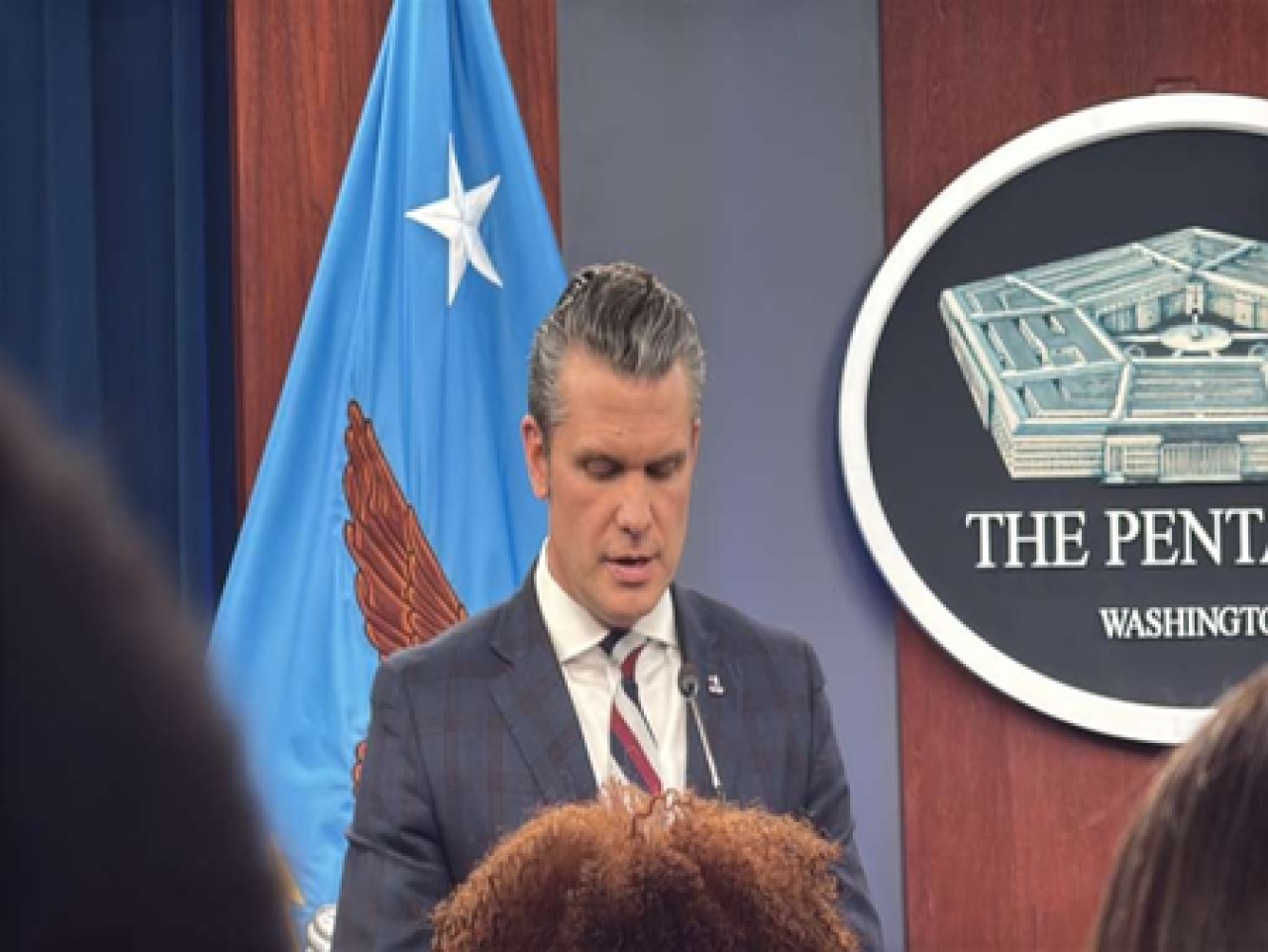
During a press briefing at the Pentagon, Secretary of War Pete Hegseth emphasized that Operation Epic Fury has already inflicted substantial damage on Iran’s military infrastructure. “I stand before you today with a clear message regarding Operation Epic Fury. The United States is decisively, destructively, and relentlessly winning,” he said. This operation commenced early Saturday under direct orders from President Donald Trump and is still in its initial stages.
Hegseth noted that only four days have passed since the operation began. “The data is changing, the situation is stabilizing, and more troops are arriving,” he added. He remarked that the results so far have been remarkable, even historic.
General Dan Keen, Chairman of the Joint Chiefs of Staff, reported that the U.S. has already targeted over 2,000 sites in Iran. As of this morning, U.S. Central Command continues to make progress. Keen highlighted that the number of ballistic missiles fired by Iran has decreased by 86% compared to the first day of fighting, with a 23% drop occurring in just the last 24 hours. There has also been a significant decline in Iranian drone attacks.
He stated that the number of one-way attack drones launched by Iran has decreased by 73% compared to the early days of the conflict. According to the Pentagon, the operation focuses on three main objectives: destroying Iran’s ballistic missile capabilities, neutralizing its navy, and preventing Tehran from rebuilding its military strength.
Keen explained, “First, we are targeting and destroying Iran’s ballistic missile systems. Second, we are dismantling the Iranian navy. Third, we are ensuring that Iran cannot rapidly rebuild or reorganize its military capabilities.”
The U.S. military has already destroyed over 20 Iranian naval vessels, including a submarine, significantly weakening Iran’s naval presence in the conflict zone. The Pentagon also mentioned a rare naval action during the conflict. Keen noted that for the first time since 1945, a U.S. Navy attack submarine sank an enemy warship using a single Mark 48 torpedo.
The Pentagon confirmed that six U.S. soldiers have been killed in the early stages of the conflict. Keen named four of the fallen: Captain Cody Cork, Sergeant First Class Noah Teigens, Sergeant First Class Nicole Amore, and Sergeant Declan Cody. All were part of the U.S. Army Reserve’s 103rd Sustainment Command. Keen expressed condolences to the families of the fallen soldiers.
U.S. officials reported that several regional allies are participating in defensive operations against Iranian attacks. Keen stated that Jordan, Bahrain, Saudi Arabia, the United Arab Emirates, Qatar, and Kuwait have intercepted drones and missiles targeting civilian infrastructure across the region. Despite the initial successes, both officials stressed that the conflict remains dangerous and uncertain.
Keen remarked, “100 hours have passed. This is just the beginning. These operations are complex, dangerous, and far from over.” The United States initiated Operation Epic Fury following months of escalating tensions with Iran over missile attacks and Tehran’s nuclear ambitions. Washington has repeatedly stated that the operation aims to destroy Iran’s missile and military infrastructure and prevent it from developing nuclear weapons.
The conflict has rapidly spread across the Middle East, with regional air defense systems intercepting drones and missiles, while the U.S. Navy conducts strikes on Iranian positions in the Persian Gulf and surrounding waters.