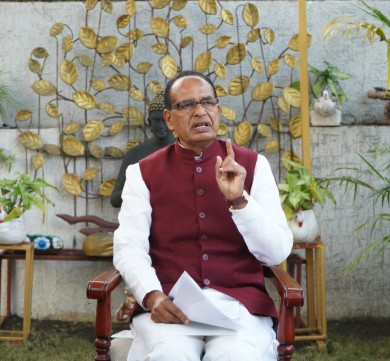
Bhopal, February 9: Central Agriculture and Farmers Welfare Minister Shivraj Singh Chouhan addressed a press conference at his residence in Bhopal, describing the recent trade deal between India and the United States as historic and unprecedented. He emphasized that this agreement would provide new momentum and heights for the Indian economy. The trade deal is not merely a commercial agreement; it symbolizes India’s growing global stature. It aims to strengthen the Indian economy while also providing it with new direction.
Chouhan stated that this agreement sends a clear message to the world. It indicates that India’s policy is one of commitment, not compromise. Decisions are made with confidence for the country’s benefit. He added that India is advancing on the international stage with a balanced and positive strategy. Rather than engaging in bargaining politics, India believes in maintaining a balanced approach and positive dialogue. This is why India is emerging as a reliable and strong partner globally.
The minister highlighted that the trade deal exemplifies diplomacy, development, and dignity. Diplomacy means putting the nation first, and this agreement prioritizes India’s national interests. Development signifies progress towards a developed India, and this deal provides a strong foundation for that. Dignity refers to the respect for farmers, and he expressed pride that the agreement fully considers farmers’ dignity.
Chouhan assured that any concerns regarding Indian Agriculture and farmers have been addressed in this trade deal. It ensures complete safety for farmers. He noted that the deal is not limited to security; it also opens doors to new opportunities. This trade agreement will provide new avenues for Indian agricultural products in the global market and play a crucial role in increasing farmers’ incomes. This is the strong foundation for a self-reliant and developed India.
The central minister announced that many agricultural products from India will be exported to the U.S. at zero tariffs. However, American agricultural products will not receive similar concessions in the Indian market. India’s agricultural and dairy interests are fully protected.
He mentioned that the U.S. has significantly reduced tariffs on several agricultural products. Tariffs that were previously as high as 50% have been cut to zero on many items, including spices, tea, coffee, coconut, coconut oil, betel nut, cashew, vegetable wax, avocado, banana, guava, mango, kiwi, papaya, pineapple, mushrooms, and some grains.
Chouhan projected that India’s agricultural exports could reach $4.45 billion by 2024-25, with an 88% increase in spice exports. Following this trade deal, Indian spices will find a new and larger market in the U.S.
He asserted that India already holds a strong position in the global spice market, exporting spices and spice products to nearly 200 locations worldwide. This agreement will further accelerate the export of spices and other agricultural products.
Chouhan emphasized that there has been no compromise on the security of the Indian market. If foreign agricultural products enter the Indian agricultural market, they will be subject to tariffs. Indian farmers enjoy full exemptions and protection. This is the greatest strength of this trade deal.
The central agriculture minister reiterated that there has been no compromise on the interests of Indian farmers regarding agricultural products in the India-U.S. trade deal. No product that could harm farmers is included in the agreement. All sensitive items have been excluded from the deal.
He clarified that there are no tariff exemptions on products such as soybean, corn, rice, wheat, sugar, coarse grains, poultry, dairy, banana, strawberry, cherry, citrus fruits, green peas, chickpeas, moong, oilseeds, ethanol, and tobacco.