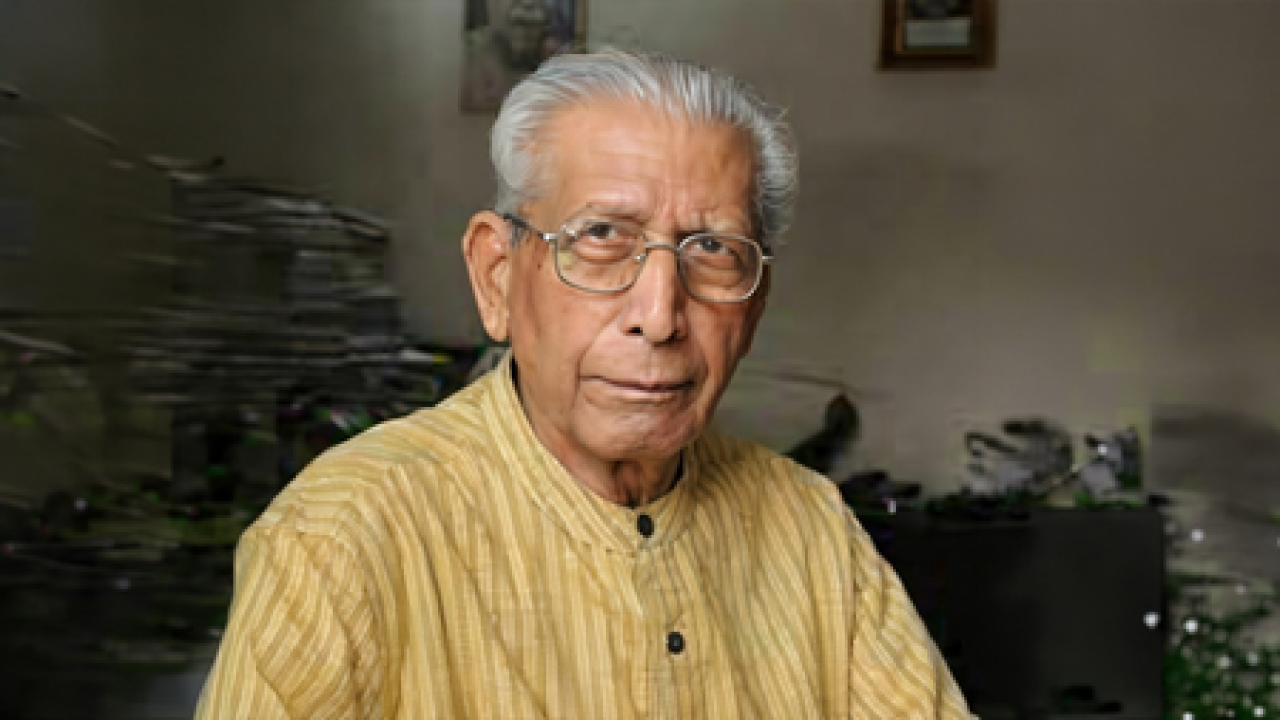
New Delhi, February 19: The world of Hindi Literature has been enriched by many writers whose words are filled with profound meaning. Among them was Dr. Namwar Singh, a critic and thinker who not only established “new paradigms of Poetry” but also left a lasting impact on students, writers, and readers of Hindi Literature.
Namwar Singh passed away on February 19, 2019, at the age of 92. However, his works and ideas continue to inspire students, writers, and readers of Hindi literature today.
Born on July 28, 1926, in the village of Jiyanpur in the Chanduali district of Uttar Pradesh, Namwar Singh provided new direction and standards to Hindi criticism. He transformed criticism from merely an analytical tool into a creative and intellectual art form. His writing was bold, profound, rooted in local culture, and filled with sharp intellect.
Singh’s literary journey began with poetry. His first poem, “Kshatriya Mitra,” was published in 1941. However, he gained recognition primarily in the fields of progressive and contemporary criticism. After earning his MA and PhD in Hindi literature from Banaras Hindu University, he began his teaching career. His mentor, Acharya Hazari Prasad Dwivedi, instilled in him a deep understanding of criticism.
His notable works have become milestones in Hindi literature. These include “Naye Pratiman of Kavita,” published in 1959, which explores the development of modern Hindi poetry and new values, earning him the Sahitya Akademi Award.
Additionally, “Chhayavad” provides a deep analysis of the beauty, philosophy, and limitations of Chhayavad poetry. “The Search for the Second Tradition” investigates alternative traditions hidden within mainstream Hindi literature. “History and Criticism” reflects on the relationship between literary history writing and criticism. Meanwhile, “Vad Vivad aur Samvad” showcases his style of literary debates, discussions, and dialogues.
Namwar Singh made contemporary literature the focus of his criticism, moving beyond progressivism to establish new literary values. He was proficient not only in Hindi but also in Urdu, Bengali, and Sanskrit. He edited magazines such as “Janayug” (weekly) and “Aalochana” (quarterly).
His political connections were also notable. After contesting the Lok Sabha elections from Chanduali on the Indian Communist Party ticket in 1959, he had to resign from his position at BHU. He later taught at Sagar, Jodhpur, and Jawaharlal Nehru University, where he was the founder and first head of the Indian Language Center.
In recognition of his contributions, he received several honors, including the Sahitya Akademi Fellowship.