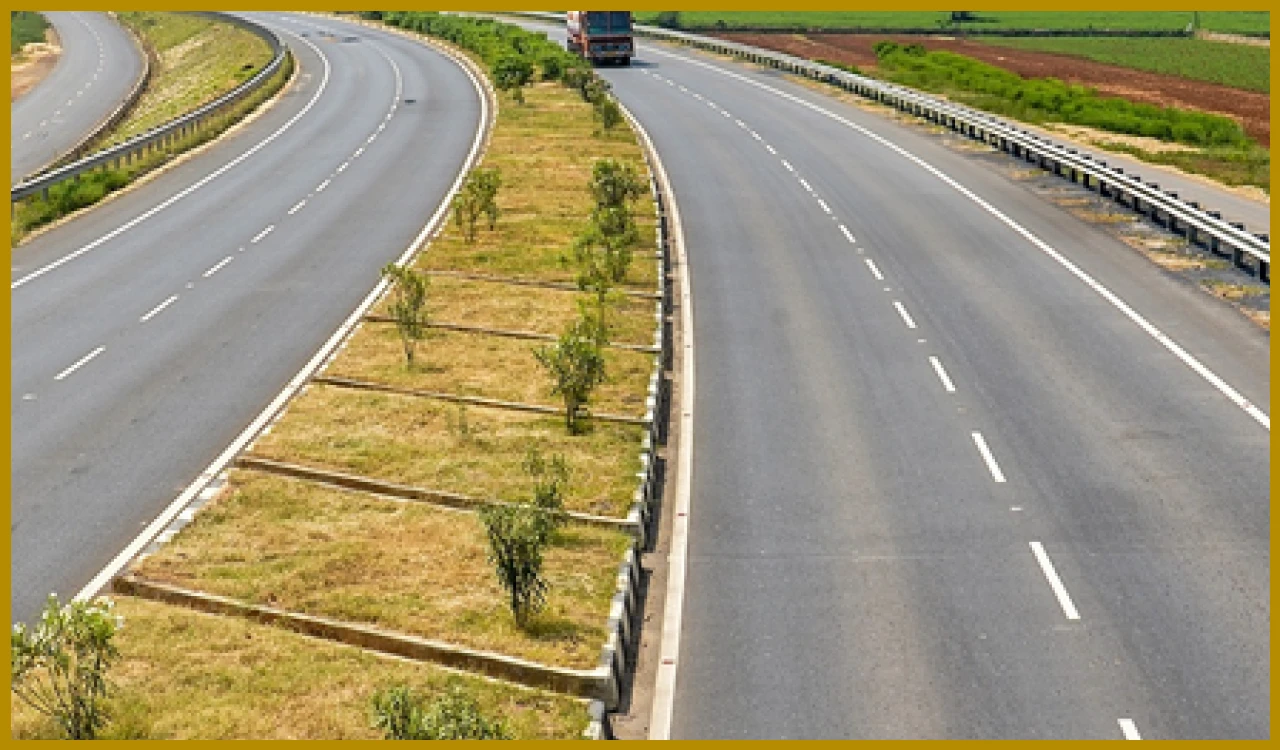
New Delhi, February 5: Union Minister for Road Transport and Highways Nitin Gadkari announced in Parliament that the government has constructed 57,125 kilometers of national highways over the past five years. This averages to 34,215 lane-kilometers built each year.
In a written response to the Rajya Sabha, Gadkari outlined the government’s goal to have 18,000 kilometers of access-controlled national expressways operational by 2028-29. Furthermore, the aim is to issue tenders for the construction of a total of 26,000 kilometers of access-controlled expressways by 2032-33.
The minister emphasized that the development of ring roads and bypasses in cities with populations exceeding 500,000 is a priority. Additionally, port connectivity is being developed according to the shipping ministry’s priorities, while connectivity to industrial nodes is being enhanced as per the National Industrial Corridor Development Corporation’s focus. Gadkari stated that these infrastructure projects will improve logistics efficiency, thereby boosting economic growth.
He noted that the infrastructure sector is a key driver of the economy, contributing to rapid economic development. The national highway network, which was 91,287 kilometers long in March 2014, has now expanded to 146,572 kilometers.
Gadkari explained that national highways primarily provide long-distance connectivity. Increased budget allocations over the years have significantly improved road quality. The length of operational access-controlled national high-speed corridors (HSCs/expressways) has grown from 93 kilometers in 2014 to 3,052 kilometers today.
The network of national highways with four lanes or more (including access-controlled HSCs/expressways) has surged from 18,371 kilometers in 2014 to 48,568 kilometers, marking a 2.6-fold increase. Additionally, the proportion of national highways with fewer than two lanes has decreased from 30 percent in 2014 to just 9 percent of the total network now. These developments have enhanced connectivity and access across urban, rural, and industrial regions, improving logistics efficiency.
According to a study by IIT Kanpur, the construction of one lane-kilometer of national highway generates direct employment for 4,478 person-days and indirect employment for 5,297 person-days. Over the long term, highway construction impacts employment by generating 52,393 person-days per lane-kilometer over a seven-year period, driven by increased economic activity in the region.