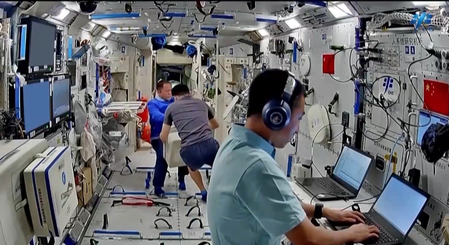
Beijing, February 8: The Chinese Shenzhou-21 manned space mission has been ongoing for over three months. The crew is engaged in various tasks, including scientific experiments, maintenance of the space station, equipment upkeep, and health management.
In the realm of space medicine, astronauts have successfully collected and processed blood samples, focusing on interactive regulation of bone metabolism and integrated omics research. These samples will be used to study the changes and adaptation mechanisms in the astronauts’ physical systems, including bones, nerves, and brain blood vessels during long-duration flights.
Regarding environmental monitoring and equipment inspection, the astronauts utilized dew point instruments and other tools to monitor the thermal environment inside the cabin and conducted air cleanliness tests.
Additionally, they performed tasks such as changing gloves in the scientific glove box, organizing materials, and cleaning and maintaining the cabin environment.
In terms of health management, astronauts employed a resistance exercise device to stimulate the flexor muscles of their lower limbs in a weightless environment, fulfilling their exercise requirements. They also completed medical tests, including intraocular pressure assessments and overall visual performance measurements.
It is noteworthy that the Shenzhou-21 spacecraft was launched on October 31, 2025, from the Jiuquan Satellite Launch Center in northwestern China.
(Source: China Media Group, Beijing)
