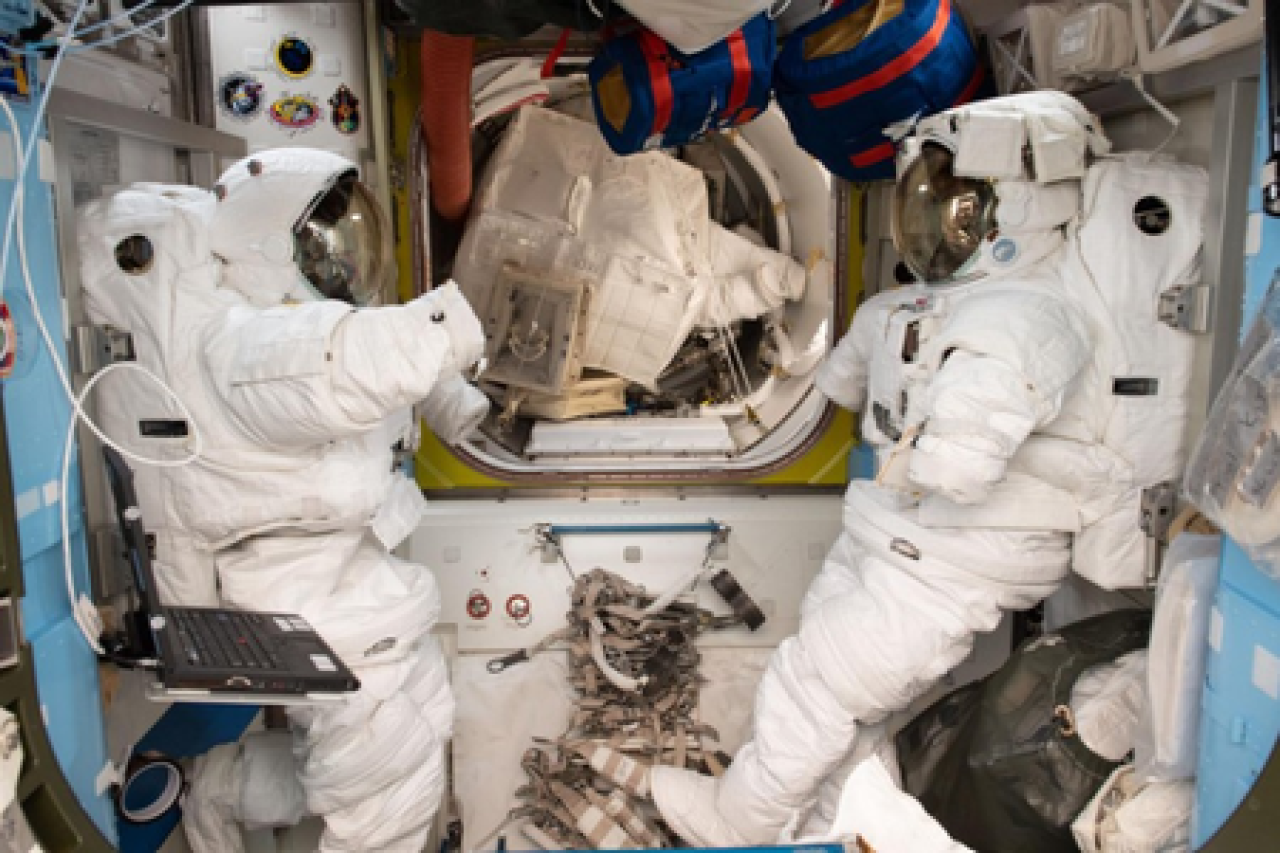
New Delhi, February 27: During spacewalks, astronauts exit the International Space Station or spacecraft to perform critical tasks. Their primary shield of safety is the spacesuit. More than just attire, a spacesuit functions as a compact personal spacecraft, providing an impenetrable barrier against the harsh and perilous conditions of space.
Spacesuits are vital for space travel. They ensure astronauts remain safe even in extreme conditions. In space, there is no air, temperatures can be extremely hot or cold, and harmful solar radiation and micrometeoroids can pose serious threats. Spacesuits protect against all these dangers. They supply oxygen, expel carbon dioxide, regulate temperature, provide drinking water, and allow astronauts to maneuver while floating in space.
A spacesuit is composed of multiple layers, each serving a distinct purpose. The hard upper torso, known as the chest piece, connects to the helmet, arms, and backpack. The arms and gloves offer flexibility for ease of movement. The helmet protects the head and features a visor coated with a metallic layer to shield the eyes from intense sunlight. The legs and boots cover the feet and assist in walking on various surfaces. A liquid cooling and ventilation garment, worn underneath the suit, envelops the entire body and contains tubes through which cool water flows to prevent overheating.
Additionally, the spacesuit includes a portable life support system, resembling a backpack. This is considered the suit’s most crucial component, containing oxygen, batteries, a fan, a water tank, and a carbon dioxide removal system. This backpack powers the suit and provides breathable air. A small jetpack, known as a “safer,” is also attached to the backpack, equipped with small thrusters to assist astronauts in returning if they drift away from the station. With the protection of the suit, astronauts can safely conduct spacewalks for 6 to 8 hours or even longer.
For launch and landing, astronauts wear the orange Advanced Crew Escape Suit and the Sokol suit. NASA is developing new suits for the Artemis and Mars missions. These suits will be more flexible, lightweight, dustproof, and durable. Given Mars’ stronger gravity, the weight and design of the suits will differ. The new suits will provide astronauts with greater freedom and make working on rough surfaces easier.