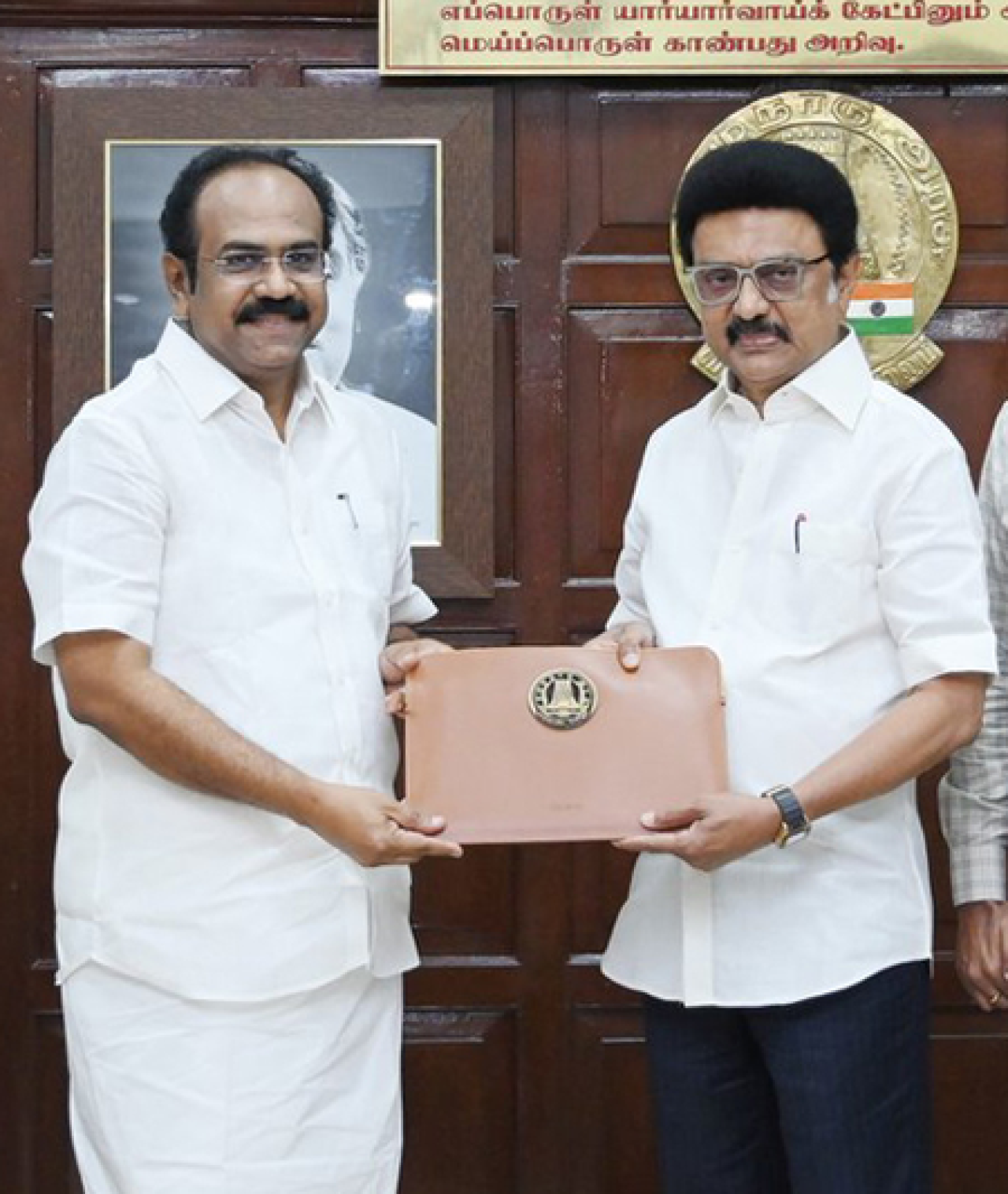
Chennai, February 17: Tamil Nadu’s Finance Minister Thangam Thennarasu presented the state’s interim budget for 2026-27 on Tuesday at the Fort St. George Assembly. The budget emphasizes welfare schemes, education, sports development, and cultural infrastructure ahead of the upcoming assembly elections.
The minister announced that during the recent economic crisis, Tamil Nadu sent ₹197 crore in relief materials to neighboring Sri Lanka, highlighting the state’s commitment to humanitarian assistance.
Key allocations include ₹718 crore for sports development and ₹28,687 crore for the rural development department. The Special Program Implementation Department received ₹17,088 crore, with ₹10 crore earmarked for promoting and teaching the Tamil language among global diaspora communities.
Social welfare remains a priority, with ₹5,463 crore allocated for pension schemes benefiting widows, destitute women, and the elderly. For school education, ₹48,534 crore has been allocated, while higher education will receive ₹8,505 crore.
The minister also announced ₹1,471 crore for the welfare of persons with disabilities, emphasizing the government’s decision to provide 4% reservation in appointments and ensure promotion opportunities in public employment.
Thennarasu noted that the Chief Minister’s breakfast scheme has significantly improved student attendance and learning outcomes in government schools.
To promote heritage and tourism, the government proposed several new museums, including a grand Chola museum in Thanjavur, a museum in Gangaikondacholapuram, a museum in Erode district, a museum in Ramanathapuram district, and new bronze and Indus Valley civilization galleries at the Egmore Government Museum in Chennai.
A Tamil cultural museum will also be established in Tiruvannamalai, with a total budget of ₹285 crore for these projects.
He further stated that the recently inaugurated world-class Kizhadi and Porunai museums have received an overwhelming response.
The minister highlighted the Kalignar Magalir Urimai Thittam as a pioneering scheme that recognizes women’s unpaid domestic labor, providing them with a monthly allowance of ₹1,000. He noted that its success has inspired other states.
–