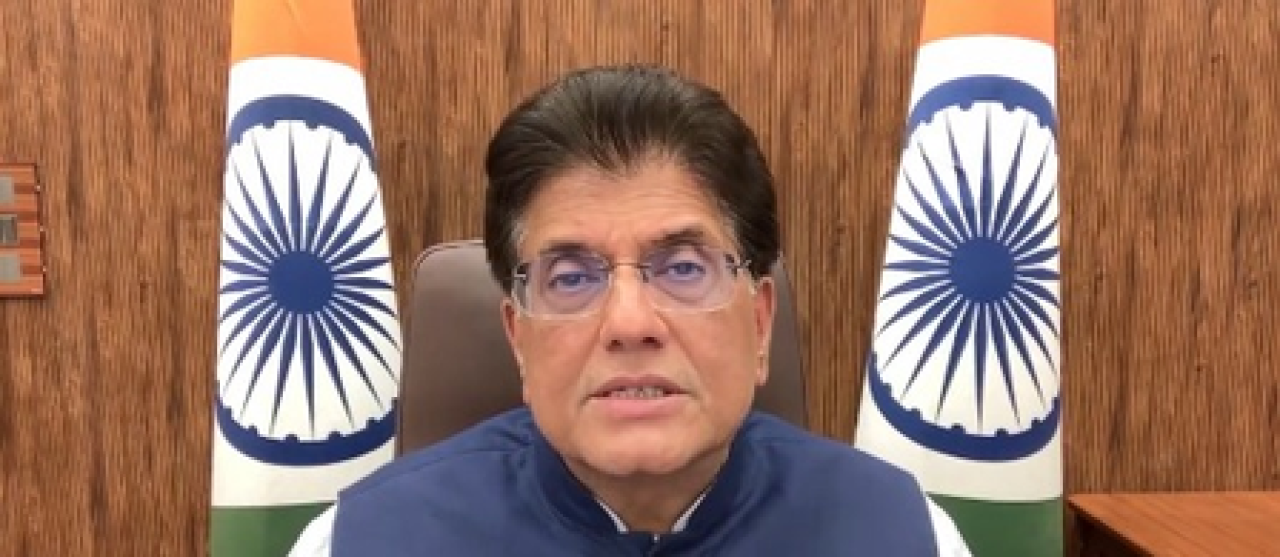
Mumbai, February 14: Union Commerce and Industry Minister Piyush Goyal dismissed opposition claims on Saturday that the India-U.S. interim trade agreement harms domestic interests.
He stated that the agreement was crafted to balance consumer interests and export-driven growth without compromising sovereignty.
Goyal emphasized that India’s position in this deal is strong, given its status as a $4 trillion economy, ensuring the protection of self-reliant sectors.
During a press conference, he described the internal agreement as “fair and balanced,” noting that the goal of purchasing $500 billion worth of U.S. goods (including energy, aircraft, and technology) over five years is merely an “intention,” not a binding obligation, driven by India’s actual BUSINESS needs.
He further mentioned that the U.S. has reduced reciprocal tariffs on Indian exports from 50% to 18%. This change offers India a clear advantage over competitors like China (35%) and Bangladesh/Vietnam (20%). Several key Indian sectors will now benefit from zero tariffs.
Goyal pointed out that sensitive agricultural products such as rice, wheat, corn, millet, and dairy have been excluded from the agreement to prevent any negative impact on these sectors.
He added, “No tariff concessions have been granted to the U.S. on dairy, poultry, meat, wheat, rice, corn, and soybeans.”
India has selectively allowed access only to items it needs or does not produce in surplus, such as walnuts, pistachios, and certain types of wine, which are subject to a minimum import price.
Goyal predicted a “huge and bright future” for the Indian cotton industry, asserting that the trade agreement will boost demand rather than harm producers.
He also mentioned that India expects to import around $100 billion worth of Boeing aircraft, engines, and spare parts over the next five years.
This growth in the aviation sector is expected to enhance connectivity in remote areas and potentially lower airfares for Indian citizens.
–