New Delhi, February 9: The inaugural T20 World Cup took place in 2007 in South Africa. Currently, the tenth edition of the T20 World Cup is being co-hosted by India and Sri Lanka. Historically, Indian batsmen have excelled in all editions of the tournament, with Virat Kohli leading the charts, followed closely by Rohit Sharma. However, the statistics for bowlers tell a different story. Not a single Indian bowler is among the top ten.
Looking at the most successful bowlers in T20 World Cup history, the top five spots are dominated by Asian bowlers, yet there are no Indian or Pakistani bowlers present. If Australian Adam Zampa and South Africa’s Anrich Nortje perform well in the 2026 edition, they could break into the top five.
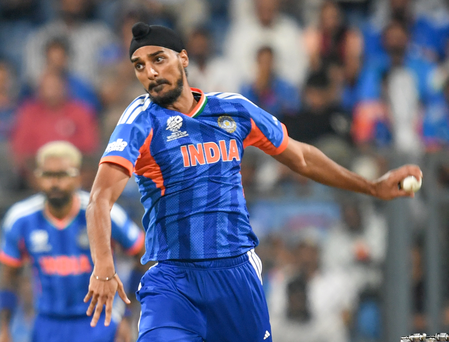
Indian fast bowler Arshdeep Singh also has a chance to enter the top ten and potentially the top five. Currently ranked 19th, Arshdeep has taken 29 wickets in 15 World Cup matches. India’s most successful bowler in the tournament has been R. Ashwin, who has claimed 32 wickets in 24 matches, placing him at 13th.
At the top of the list is former Bangladesh captain Shakib Al Hasan, who has taken 50 wickets in 43 matches from 2007 to 2024. Sri Lanka’s Wanindu Hasaranga is in second place with 40 wickets in 20 matches played between 2021 and 2026. Former Pakistan captain Shahid Afridi ranks third with 39 wickets in 34 matches.
Fourth is Afghanistan’s captain Rashid Khan, who has secured 38 wickets in 24 matches from 2016 to 2026. In fifth place is former Sri Lankan fast bowler Lasith Malinga, who led Sri Lanka to a T20 World Cup victory and has taken 38 wickets in 31 matches. Australian Adam Zampa is sixth with 36 wickets in 21 matches, also in contention for a higher rank.
Former Pakistani spinner Saeed Ajmal is seventh with 36 wickets in 23 matches from 2009 to 2014. New Zealand’s Tim Southee ranks eighth with 36 wickets in 25 matches from 2010 to 2024. South Africa’s Anrich Nortje is ninth with 35 wickets in 19 matches, while Sri Lanka’s Ajantha Mendis rounds out the top ten with 35 wickets in 21 matches from 2009 to 2014.