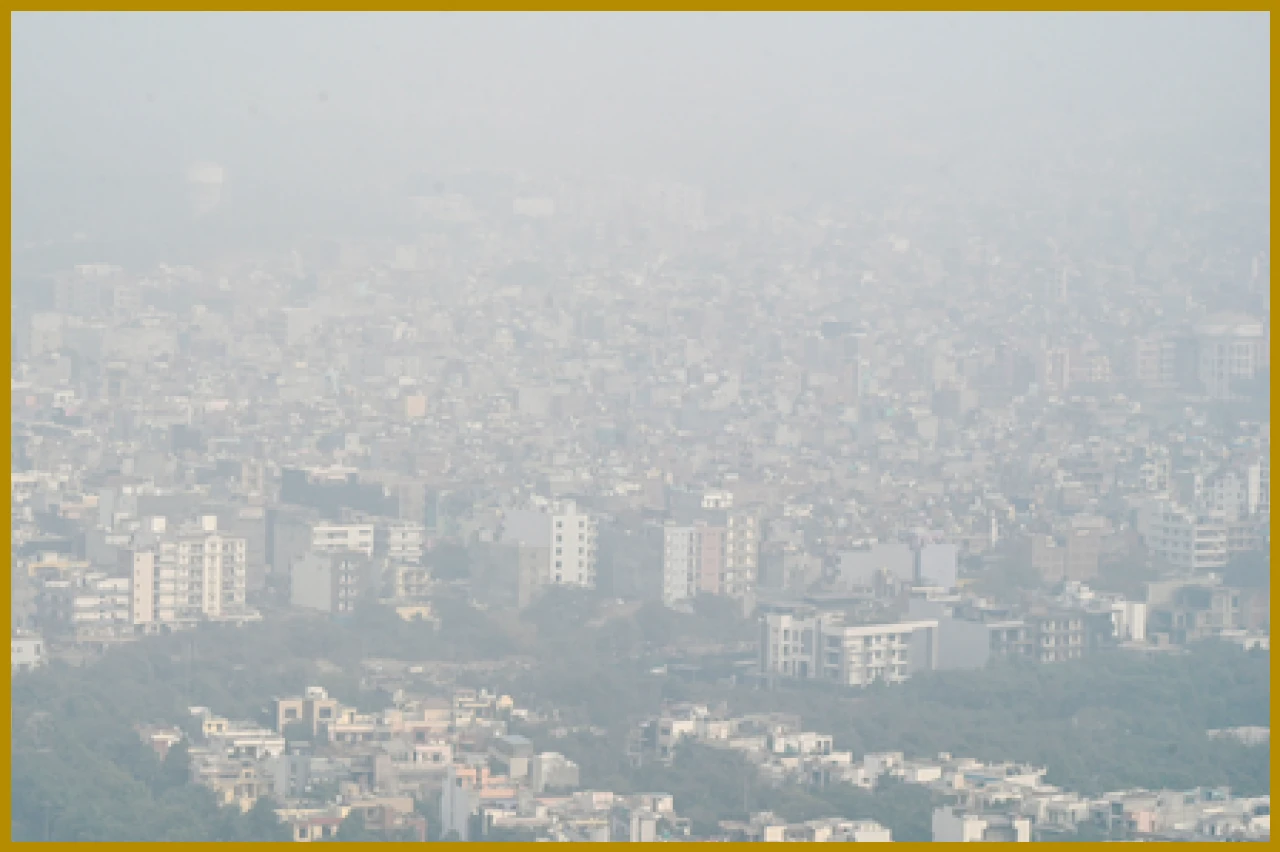
Noida, February 4: Air pollution levels have reached alarming heights not only in Delhi-NCR but also in surrounding areas. Recent data from the Central Pollution Control Board (CPCB), Uttar Pradesh Pollution Control Board (UPPCB), Delhi Pollution Control Committee (DPCC), and the Meteorological Department indicate that most regions in NCR are classified as red zones, posing a serious health risk to the public.
In Ghaziabad, all active monitoring stations recorded air quality in the severely polluted category. The Air Quality Index (AQI) in Indirapuram was 388, in Loni 386, and in Vasundhara 386, while Sanjay Nagar recorded an AQI of 238, which is also considered poor.
Noida is facing similar conditions. In Sector 1, the AQI was 362, in Sector 116 it was 354, and in Sector 125, it was 358—all falling within the red zone category. Sector 62 recorded an AQI of 288, placing it in the orange zone, which is still not deemed safe for health.
Many areas of Delhi continue to experience extremely poor air quality. Anand Vihar recorded an AQI of 381, Ashok Vihar 374, Chandni Chowk 363, Mundka 386, and Nehru Nagar 389. Additionally, Jahangirpuri had an AQI of 388, Bawana 335, and around the Dr. Karni Singh Shooting Range, the AQI was 340. However, Lodhi Road recorded a comparatively lower AQI of 220, and Mandir Marg had 269.
According to the Meteorological Department, dense fog and humidity persist in the plains due to the influence of a western disturbance, causing pollutants to remain suspended in the atmosphere for extended periods.
The India Meteorological Department (IMD) reports that on February 4, the minimum temperature will be 9 degrees Celsius, with a maximum of 22 degrees Celsius. Dense fog is expected in the morning and afternoon. Moderate fog is forecasted for February 5, and light fog for February 6.
Experts suggest that relief from pollution is unlikely until wind speeds increase and the weather clears. Doctors advise children, the elderly, and individuals with respiratory issues to stay indoors, wear masks, and avoid outdoor activities in the morning and evening.